
Renaming & Community Response Information Hub
Current Phase: Recommendation Development
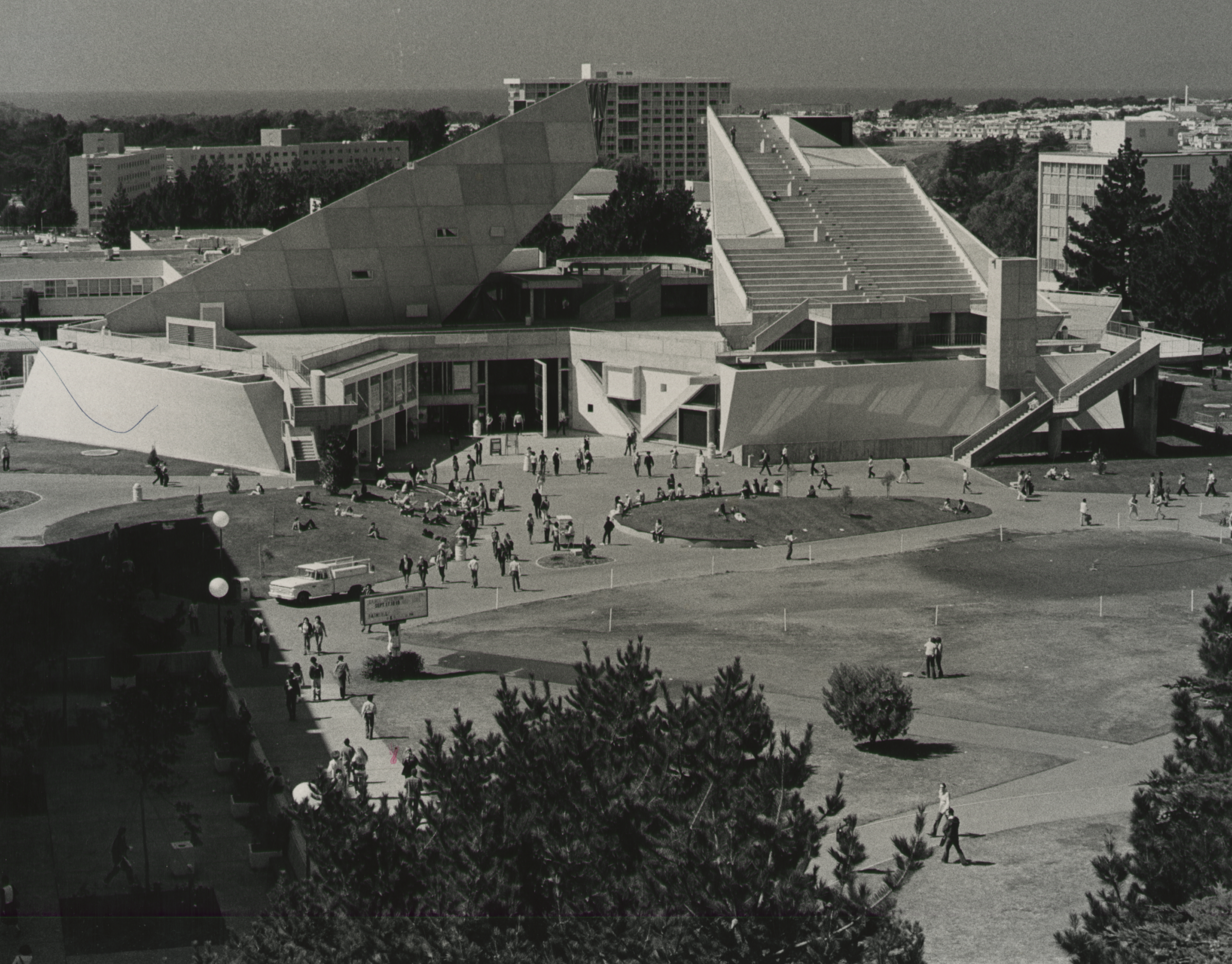
The Renaming Ad Hoc Committee is now reviewing community input from the survey, Town Halls and written comments as it develops a recommendation for the Student Center’s future name. No final recommendation has been made.
On March 18th, 2026, the Associated Students Board of Directors issued the Statement Acknowledging Sexual Misconduct Allegations Against César Chávez. AS is now actively pursuing the renaming of the Student Center and reviewing how references to César Chávez appear within AS-operated spaces and communications.
This page serves as the central source for information about the process.
How Community Input Is Being Used
The Ad Hoc Committee is reviewing feedback collected through the survey, Town Halls and written comments to identify community priorities, concerns and recommendations. That input will inform the Committee’s development of a formal renaming recommendation.
Community input is one part of the Committee’s deliberation and does not function as a binding vote.
What's Happening?
✓ Removal of the César Chávez name from AS marketing materials & website
✓ Temporary coverage of the building name where feasible
✓ Evaluation of references to César Chávez within AS-managed spaces
✓ Development of a formal renaming proposal
✓ Community survey conducted Aug. 17-Sept. 25
✓ Town Halls held Oct. 6-7. View the presentation.
✓ The Ad Hoc Committee is reviewing survey responses, Town Hall feedback and written comments
✓ The Committee is developing its renaming recommendation
How Does Renaming Actually Work?
SFSU is part of the California State University system; renaming the building requires review and approval through established university and CSU governance processes.
- Associated Students establishes an AdHoc Committee comprised of elected student government representatives & student org representatives.
Student & community feedback is gathered through canvassing, community forums, surveys & town halls.
The AdHoc committee prepares a proposal.
SFSU President reviews the proposal.
The proposal is submitted for final determination by the CSU Board of Trustees.
Timeline
- AS Board of Directors approved public statement
- Ad Hoc Committee created
- Ad Hoc Committee membership approved
- Strategy & action plan development
- Student & community engagement
- Community input review
- Renaming recommendation development
- Target proposal approval & submission
- University/CSU review process begins
- University & CSU review continues
- Target CSU Board of Trustees consideration
- Action plan implementation, pending approvals
Timeline
SPRING 2026
• AS Board of Directors approved
public statement
• Ad Hoc Committee created
SUMMER 2026
• Ad Hoc Committee membership
approved
• Strategy & action plan development
FALL 2026
• Student & community engagement
• Community input review
• Renaming recommendation development
• Target proposal approval & submission
• University/CSU review process begins
WINTER 2026-27
• University & CSU review continues
• Target CSU Board of Trustees
consideration
SPRING 2027
• Action plan implementation, pending
approvals
FAQ
Community input was collected through the Student Center Renaming Survey, public Town Halls and written comments.
The Ad Hoc Committee is reviewing the feedback as it develops its renaming recommendation, which will then move through the required AS, University and CSU review processes.
Renaming the building requires review and approval through established university and California State University processes, which take time. Associated Students is actively working through those steps as quickly and thoughtfully as possible.
The Student Center Renaming Ad Hoc Committee was established by the Associated Students Board of Directors to gather student and community feedback and develop a recommendation for a new name for the Student Center.
Read the full Student Center Renaming Ad Hoc Committee Charter →
The committee brings together elected student representatives, an Ethnic Studies representative, representatives from Legacy Organizations housed in the Student Center, faculty, alumni/community representation, and advisory representatives from Associated Students and the University.
View the committee's full composition in the Ad Hoc Committee Charter →
The Ad Hoc Committee gathers and considers community feedback, develops a recommendation, and brings that recommendation forward through the formal approval process; the committee does not make the final decision to rename the building.
The final decision to rename the building rests with the California State University Board of Trustees. Associated Students is responsible for developing and advancing a recommendation through the appropriate university processes.
Associated Students has begun removing the César Chávez name from materials within our control while the formal renaming process is underway. Some locations and materials require additional approvals or coordination and will be updated over time.
You can read the Associated Students Board of Directors' March 18, 2026 statement here.
If you have a question that isn't addressed on this page, please contact us at renaming@asi.sfsu.edu. We'll do our best to respond and update this page with additional information as appropriate.

What Information Will Be Shared?
Associated Students is committed to sharing:
Major process milestones
Student engagement opportunities
Estimated project costs when available
Final decisions and implementation plans
Stay Updated
Updates on the SFSU Student Center Renaming Ad Hoc Committee’s recommendation
and next steps will be posted to this page as the process moves forward.
Contact Us
Questions that are not addressed on this page may be sent to: renaming@asi.sfsu.edu.
Last Updated: October 2026.